Sunday, November 8, 2009

The Beatles


The British Invasion of music into the States was one of the most prominent musical movements of all time. I found some interesting things online that told more about how they began and ended their musical journey.

Introduction

“I have never seen anything like it. Nor heard any noise to approximate the ceaseless, frantic, hysterical scream which met the Beatles when they took the stage after what seemed a hundred years of earlier acts. All very good, all marking time, because no one had come for anything other than the Beatles...

Then the theatre went wild. First aid men and police – men in the stalls, women mainly in the balcony – taut and anxious, patrolled the aisles, one to every three rows.

Many girls fainted. Thirty were gently carried out, protesting in their hysteria, forlorn and wretched in an unrequited love for four lads who might have lived next door.

The stalls were like a nightmare March Fair. No one could remain seated. Clutching each other, hurling jelly babies at the stage, beating their brows, the youth of Britain’s second city surrendered themselves totally.”

Derek Taylor (From his book “Fifty Years Adrift”

1969

Following the White Album(and the magnificent Hey Jude) they made Let It Be and with the final regal glory of Abbey Road they left their grieving fans a legacy that will never be matched.

In the inevitable breaking down of old liaisons, there was room for growth. John met and married Yoko; Paul met and married Linda. George matured far beyond his years, settled into his spiritual space and expressed himself writing classic songs; Ringo was now writing his own numbers and was widely acknowledged as a supreme drummer and a very good actor. To everything there is a season.

That the rift between The Beatles, evolved with much public angst was a pity but this is not a perfect world is it?

Relationships anyway, were repaired long ago.

And in the end, the equation between the love they took and the love they made was intact into infinity. They still represent the twentieth century’s greatest romance.

http://www.thebeatles.com/#/history/1969

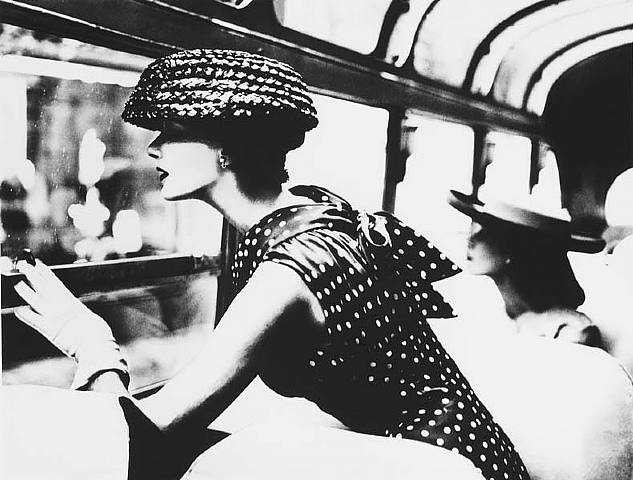
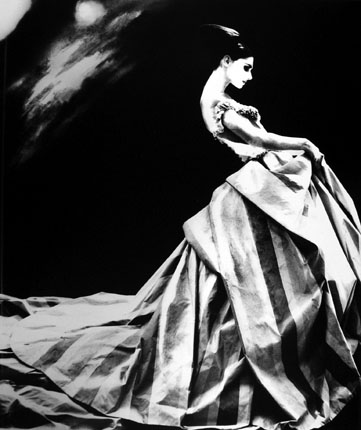
Lillian Bassman


Lillian Bassman is a female painter and photographer that used an experimental process to create art. Her work centered around the feminine; always elegant yet edgy for the time. I found this really interesting article about her tiredness of the world of fashion photography and how she destroyed a bunch of her negative prints in retaliation. Interestingly enough, she went back many years later to try to salvage the pieces and create something new from what she dug out of her trash can. Check out the article and some pictures!

http://www.nytimes.com/2009/07/17/arts/design/17bassman.html
Alex Riggio

Monday, November 2, 2009

Eye Magazine: Meanings of Type

After reading the article The Meaning of Type on the Eye Magazine website, it was interesting to learn how much type has been through throughout the years. One thing that caught my attention the most was that the use of lowercase and uppercase letters together wasn't tampered with until the early 1920's. It was also interesting to learn how some typefaces we still widely use today came to be and how some typefaces were designed solely for the use of advertising and afterwards were used for more than that.

S. Mueller

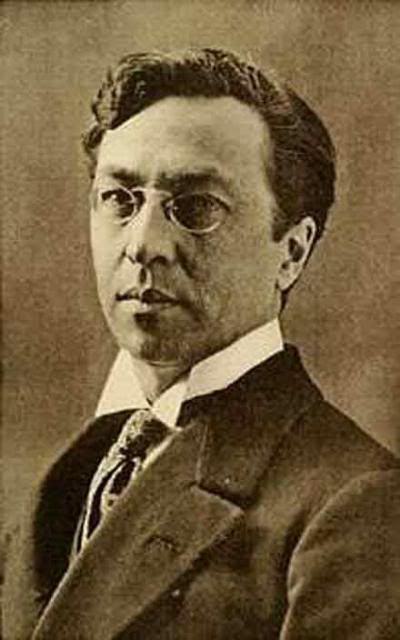
Wassily Kandinsky


Wassily Kandinsky was the first person to be credited with creating modern abstract works. He originally was not even an artist and did not pursue that profession until his later years.


Kandinsky enrolled in the University of Moscow and studied law and economics. It wasn't until 1896, at 30 years old, that he quit his very promising profession to enroll in a Munich art school. He wasn't admitted right away so he began to teach himself art. He was influenced greatly by Monet's 'Haystacks' and Richard Wagner's 'Lohengrin'.


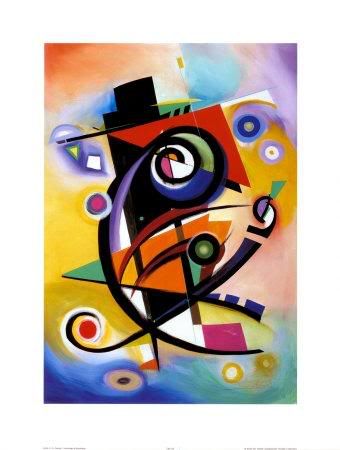
Kandinsky called his art 'inner beauty, fervor of spirit, and deep spiritual desire, inner necessity'. None of his paintings emphasized human beings, they were more abstract figures.


Kandinsky also was an art theorist, helping to found the Neue Kunstlervereinigung Munchen or the New Artists Association and in 1909 he became the president. After their demise in 1911, he is credited with forming the Blue Rider Group. Kandinsky taught at the Bauhaus in Germany but once that closed he moved to France where he died in 1944.


S. Mueller

Saturday, October 17, 2009

Frank Lloyd Wright

Frank Lloyd Wright loved nature and it was expressed consistently through his works. His buildings never had a basement or attic, mimicking a horizontal plane. The ceilings were always low (possibly to compensate for his small stature) and the windows were often uninterrupted walls so that one would feel closer to nature. His simplistic houses served as inspiration for a new style of architecture in the Midwest called the Prairie School. He would later become one of its chief practitioners.
In his lifetime, Wright's style began to grow rapidly in popularity in the United States and Europe. As his popularity grew, he made more dramatic structures. When he built skyscrapers, they mimicked trees with a central trunk and branches coming out. He loved to use natural elements and forms. It was his dream for these natural elements to become the basis of American architecture.
Wright's biggest project was the Taliesin which was an architectural fellowship where young students could pay to work and learn from him. He gathered a total of thirty apprentices. He would continue to expand as the number of apprentices grew. Through the Taliesin Fellowship, Wright was able to create the Kaufmann House in Pennsylvania and the SC Johnson Wax Administration Center in Wisconsin.

I personally am not the biggest fan of Frank Lloyd Wright's style. While it is extremely luxurious and undeniably interesting, it isn't very practical. I feel like no one would ever live in buildings like his and therefore have no value in the real world.

- Tyler Pey

Monday, October 12, 2009

Russian Constructivism

Russian Constructivism was a movement that was active from 1913 to the 1940s. It was a movement created by the Russian avant-garde, but quickly spread to the rest of the continent. Constructivist art is committed to complete abstraction with a devotion to modernity, where themes are often geometric, experimental and rarely emotional. Objective forms carrying universal meaning were far more suitable to the movement than subjective or individualistic forms. Constructivist themes are also quite minimal, where the artwork is broken down to its most basic elements. New media was often used in the creation of works, which helped to create a style of art that was orderly. An art of order was desirable at the time because it was just after WWI that the movement arose, which suggested a need for understanding, unity and peace. Famous artists of the Constructivist movement include Vladimir Tatlin, Kasimir Malevich, Alexandra Exter, Robert Adams, and El Lissitzky.

posted by: Kristen Powers

works cited:

http://www.arthistoryarchive.com/arthistory/constructivism/

Sunday, October 11, 2009

Maxfield Parrish

Maxfield Parrish (1870-1966) was a popular American artist during the "golden age of illustration". His many illustrations for children's books, and magazine covers as well as his ads for products such as, General Electric and Jell-O also made him a graphic designer of sorts. Parrish also did paintings specifically for art print reproduction, which became immensely popular with the new middle class.
Although Parish was predominately a painter, he was also a gifted writer and was known for his use and knowledge of color (some even refer to "Parrish Blue").
He enjoyed immense public recognition during the Art Nouveau and Art Deco periods, even though his work was executed in a wholly personal style, something which is seldom achieved by most artists.


Kristen Powers

works cited:
Maxfield Parrish. Ludwig, Cory. Schiffer Publishing, Atglen, Pa. 1973
http://parrish.artpassions.net/